
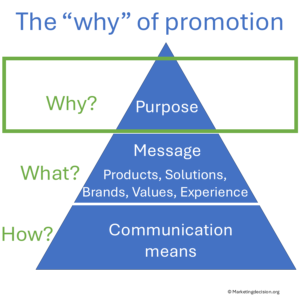
 The “Why” defines the purpose and business needs behind every communication effort.
It provides a platform for internal alignment, ensuring that management and marketing teams share a common understanding of goals before addressing budgets or tools.
Asking the question “Why” starts with clarifying business objectives with questions such as:
This step creates the foundation for consistent, measurable promotion and ensures that investments contribute to clear business outcomes. By clarifying the “Why” first, management discussions about budgets and resources become more strategic and transparent.
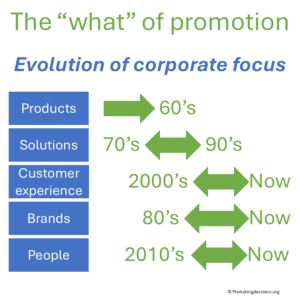 The “What” of promotion defines what to communicate in response to the purpose identified in the “Why.” It articulates the message, features, and benefits that will best express the company’s objectives. In other words, the “What” connects the purpose of promotion with specific communication content – whether it highlights a product capability, a service benefit, a brand value, or a customer experience.
In earlier decades, promotion focused primarily on products; today it reflects also – and even more – company purpose, values, and culture.
Consequently, organizations increasingly highlight their:
Overall, sharing and demonstrating high standards has become essential to reinforce brand value.
With social media exposure and global transparency, companies must communicate authentically and manage reputational risk through honesty and consistency.
The “What” of promotion thus expands the company narrative – from products to purpose.
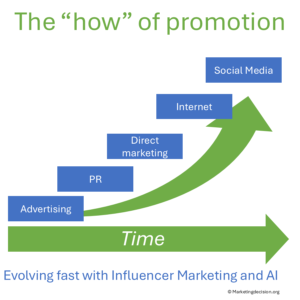 The “How” determines the means and tools used for promotion.
While once limited to advertising and public relations, communication has been transformed by digital channels, social networks, and merchandising.
Companies can now use multiple avenues to reach audiences:
More on merchandising can be found on Investopedia.
These combined channels form the promotion strategy that defines how the company image is created, shaped, and sustained. Branding, in this sense, is the art of crafting a consistent narrative that builds and reinforces the company image over time.
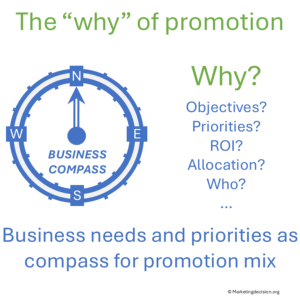 Clarifying the purpose of promotion involves asking the right business questions – the compass for promotional planning:
These questions help marketing teams and management determine where to invest and how to measure results. They also align promotional activities with overall market strategy and growth goals.
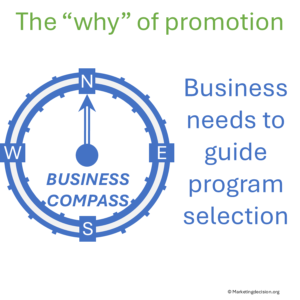 The purpose of promotion in marketing is to define why communication matters, what messages need to be conveyed, and how they will be delivered effectively.
Asking marketers why money is spent on promotion brings accountability and sharper focus. It encourages discussions that improve ROI tracking, resource allocation, and strategic alignment across teams.
Explore related insights to deepen your understanding of promotion and communication within the marketing mix:
These reflections summarize the key principles of promotional strategy and lead naturally to some frequently asked questions.
Promotion strategies must align with segment-specific needs and behaviors. For segmentation foundations, visit Customer Segmentation Principles.
The relevance of any communication effort depends on customer motivations and decision behaviors. For the broader context, explore our Customer Mix analysis.
Promotion principles become clearer when connected to the overall promotional framework. See Promotion Strategy for the full structure.

Explore tools designed to support the different areas of the marketing mix