
Design meaningful customer segmentation with a practical method driven by your business objectives.
This free Customer Segmentation Guide PDF provides a practical seven-step method to help you organize and conduct a customer segmentation exercise with your team.
Start with a real business challenge, use relevant qualitative and quantitative knowledge, identify meaningful customer differences, and develop segments that support business decisions.
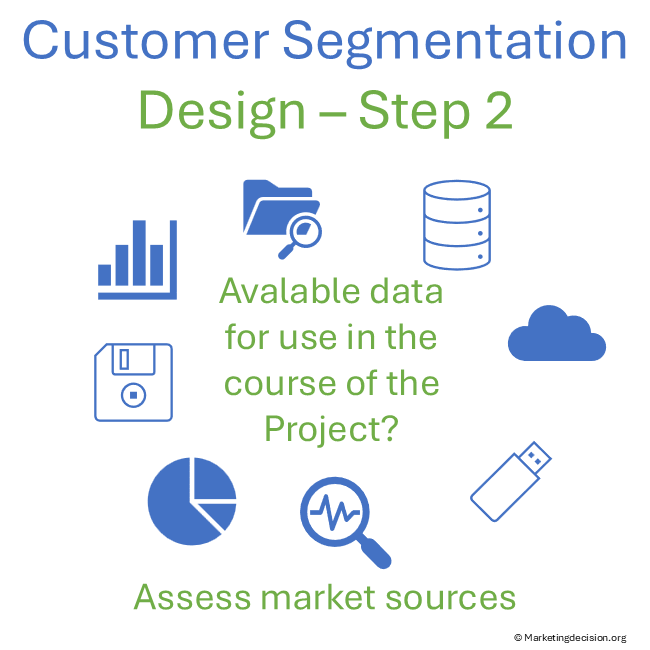
Begin with the knowledge already available within your company. A small internal team can often produce useful results in a few hours. The same methodology can also serve as a pilot to assess whether further research is necessary.
Download the free guide and turn customer knowledge into actionable marketing decisions.
© marketingdecision.org
€0.00 Exc. VAT

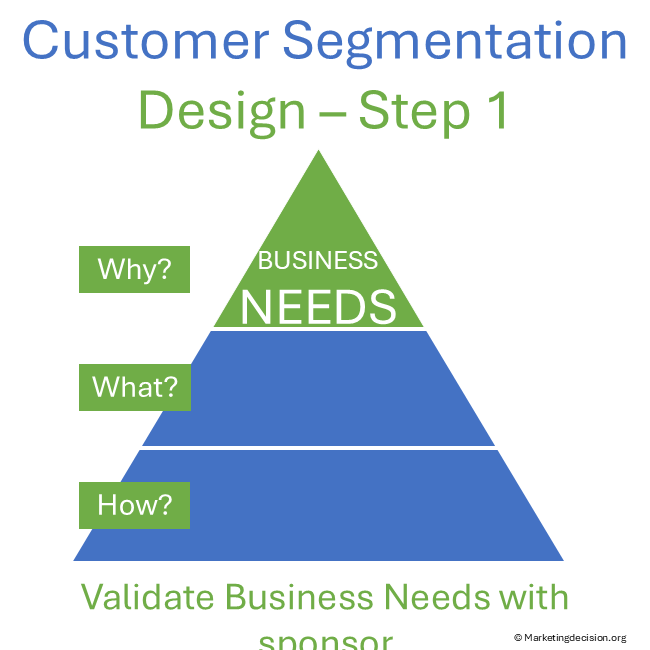
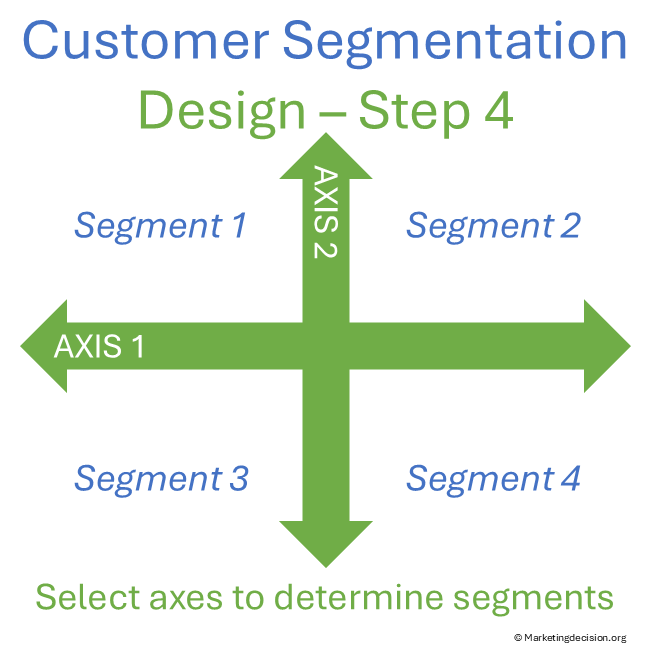
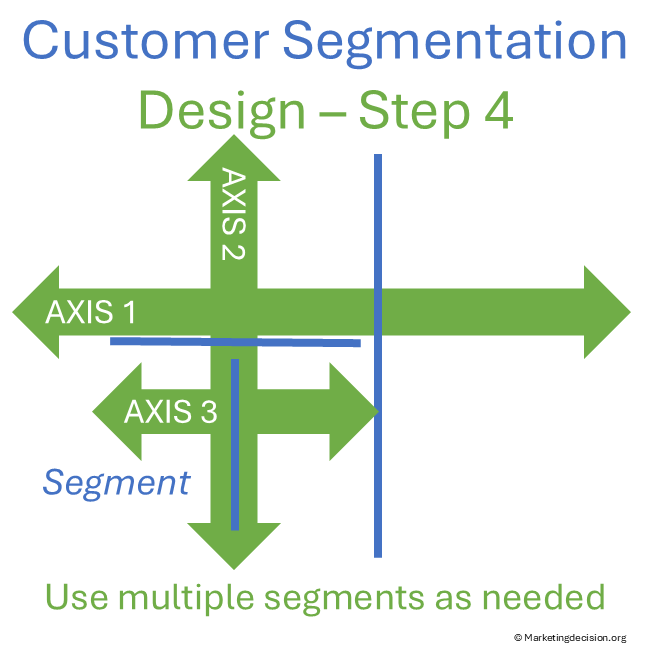
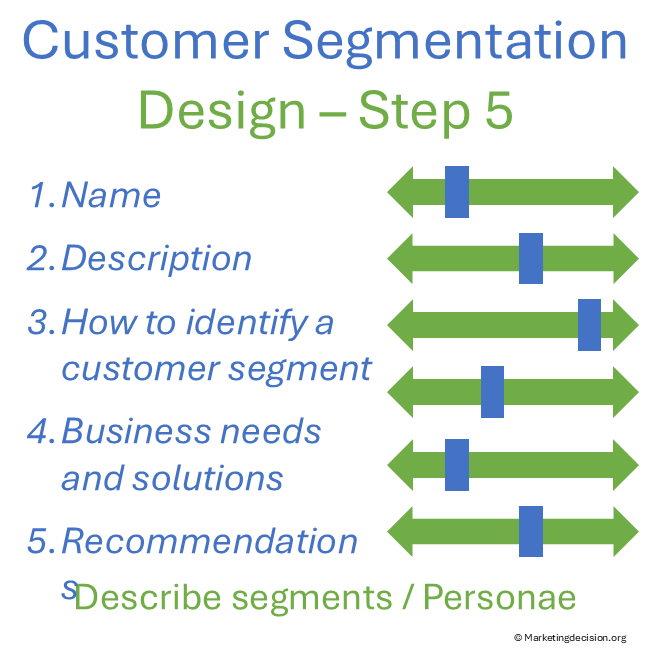
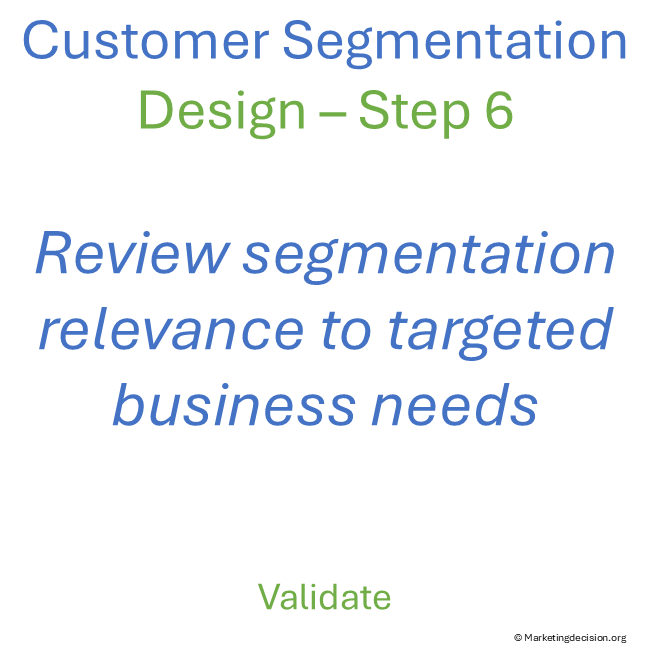
Effective customer segmentation begins with understanding the business challenges your organization needs to address.
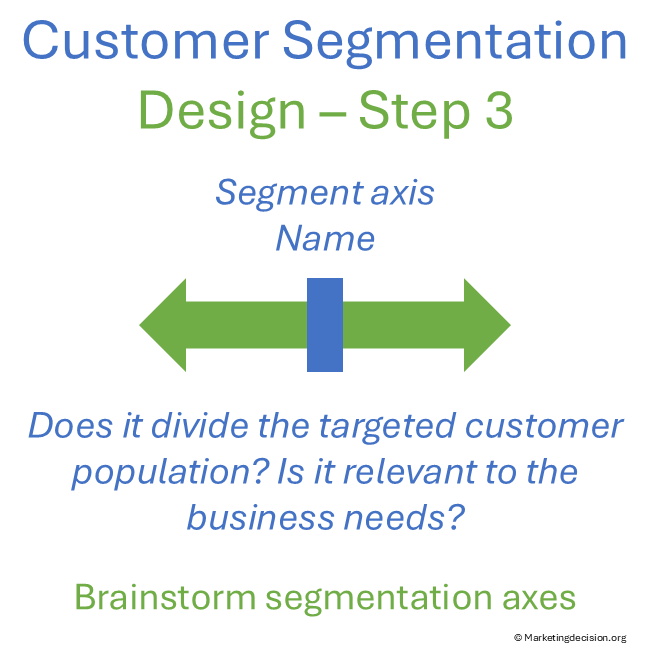
These objectives guide the choice of segmentation criteria, the information to investigate, and the decisions that will follow. Depending on the business question, relevant customer differences may concern needs, behaviors, purchasing situations, value expectations, or other characteristics.
The purpose is to develop meaningful customer segments that help your organization make better decisions.
A well-designed segmentation can help teams:
Improve marketing communications by tailoring messages and content to the needs, expectations, and priorities of each segment.
The segmentation exercise can also help teams look beyond their current customers, challenge internal assumptions, and consider the competitive environment when relevant to their objectives.
This guide provides a structured approach to move from business questions to segmentation decisions.
The guide combines a classical segmentation methodology with practical instructions that teams can adapt to their situation.
The method is particularly useful for teams seeking a structured and efficient way to develop segmentation using the resources available.
This guide can help when you need to:
Develop an initial customer segmentation with limited time and resources.
Reconsider an existing segmentation that no longer addresses your business challenges.
Organize a segmentation workshop involving marketing, sales, service, or other customer-facing teams.
Explore customer differences beyond the information currently available in your CRM.
Test an internal segmentation exercise to determine whether it provides sufficient insights before undertaking a larger study.
Translate customer knowledge into decisions about marketing priorities, value propositions, solutions, or commercial approaches.
The approach is particularly relevant to B2B organizations, where different customer needs, purchasing situations, and business priorities often require careful consideration.
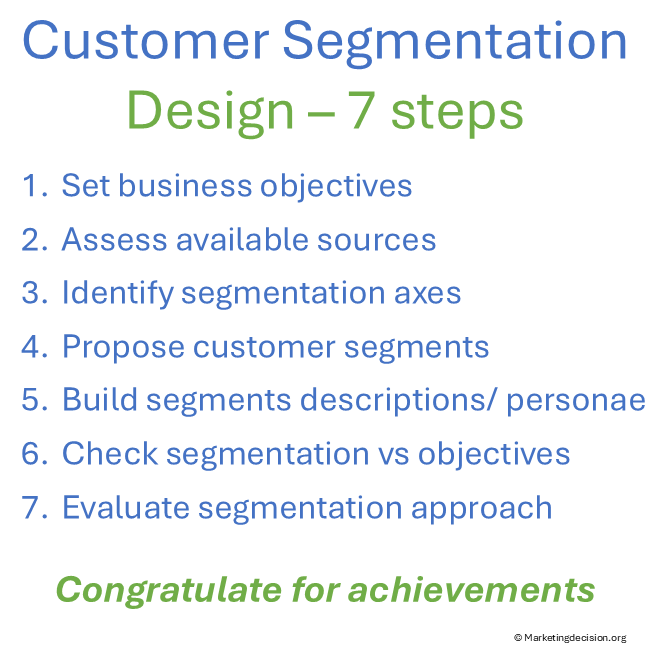
The guide follows seven steps, from defining the business challenge to evaluating the results.
The method is iterative. New insights may lead teams to reconsider earlier assumptions, segmentation axes, or segment definitions as their understanding develops.
Full-scale segmentation efforts follow similar steps but include interviews and comprehensive market research to validate findings.
This simplified approach can serve as a test phase to assess feasibility and determine whether a more extensive segmentation is necessary.
In many cases, a straightforward segmentation using internal company knowledge – both qualitative and quantitative – can be sufficient to align marketing efforts effectively.
For example, the guide describes how a small team of five or six people can organize an initial segmentation exercise over approximately four hours.
The workshop format can be adapted to the project’s scope, participants, and objectives. Projects may involve separate preparation sessions, additional stakeholders, or more extensive research.
The guide provides practical instructions to help you conduct the segmentation process, including:
The guide combines methodological explanations with practical instructions for conducting the exercise.
This practical PDF guide complements two resources that explain customer segmentation and the underlying methodology in greater detail.
Customer Segmentation Principles explains why segmentation matters, what makes customer differences relevant, and how segmentation supports business decisions.
Customer Segmentation Design – Practical 7-Step Guide explains the methodology and the reasoning behind each step in more detail.
The downloadable PDF complements these pages by providing practical instructions for organizing and carrying out the exercise with your team.
Effective customer segmentation begins with understanding what your organization needs to decide.
A practical, business-driven approach can help teams identify meaningful customer differences, challenge assumptions, clarify market opportunities, and align their actions with business objectives.
Segmentation also benefits from an outside-in perspective. Customer expectations, competitive conditions, and market opportunities can influence which segmentation criteria are relevant and how the results should be applied.
A structured and scalable method enables organizations to begin with available knowledge, learn through the segmentation process, and expand their research when appropriate.
Download the free Customer Segmentation Guide PDF and get started with a method you can adapt to your business needs.
Purchase and use of the application are subject to the applicable General Sales Conditions.
We use cookies to improve your experience on our site. By using our site, you consent to cookies.
Manage your cookie preferences below:
Essential cookies enable basic functions and are necessary for the proper function of the website.
These cookies are needed for adding comments on this website.
Stripe is a payment processing platform that enables businesses to accept online payments securely and efficiently.
Service URL: stripe.com (opens in a new window)
Statistics cookies collect information anonymously. This information helps us understand how visitors use our website.
Google Analytics is a powerful tool that tracks and analyzes website traffic for informed marketing decisions.
Service URL: policies.google.com (opens in a new window)