
Sales compensation plans are at the heart of every high-performing sales organization. They shape behaviors, align individual goals with company strategy, and motivate sales teams to achieve their targets — or quotas — through fair, transparent, and rewarding structures.
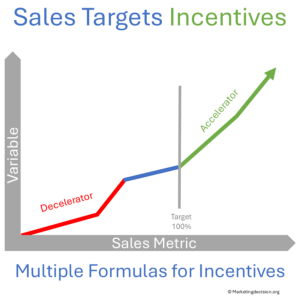
When sales targets are well defined, measurable, and perceived as fair, they can energize an entire organization. When poorly set, they can erode trust and drive unwanted behavior. Understanding how to design and manage effective sales compensation plans is therefore a critical management skill. Sales plans with bonuses and accelerators when objectives are met or exceeded are classics for sales teams.
Company results are delivered through the work of sales individuals, and many companies have adopted variable compensation plans to motivate and engage sales teams.
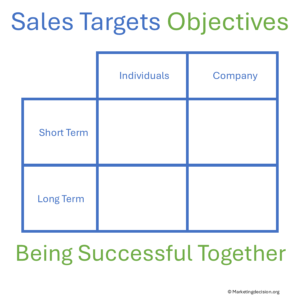 Company results are delivered through the daily work of salespeople. To sustain motivation and performance over time, most organizations adopt variable compensation plans with bonuses and accelerators when objectives are met or exceeded.
When the market is down, these plans allow companies to adjust sales expenses dynamically. When the market is up, accelerator incentives reward exceptional performance and help drive higher volume.
When salespeople leave, they take customer knowledge and relationships that may take months to rebuild. A well-designed plan limits turnover, keeps salespeople motivated, and maintains alignment between individual success and company growth. In contrast, poor plans can create internal inequities, frustration, or even destructive competition among team members.
What makes a sales compensation plan successful? Several key questions must guide management during the design process:
 How can the company retain its best salespeople — and how are they identified?
Negotiations around targets are common; for many salespeople, discussing their plan is part of demonstrating competence and commitment.
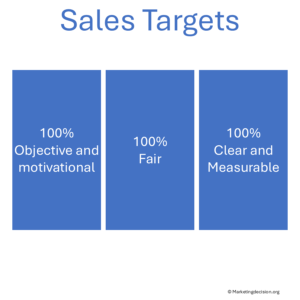
A successful compensation plan helps every salesperson understand their targets and how they contribute to business outcomes. It creates a positive environment where confidence grows among team members, customers, and management.
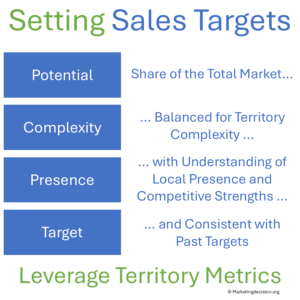 Fairness is the cornerstone of any motivational plan. Sales teams constantly compare themselves to peers, so understanding territory potential, complexity, and performance is vital.
Key fairness factors include:
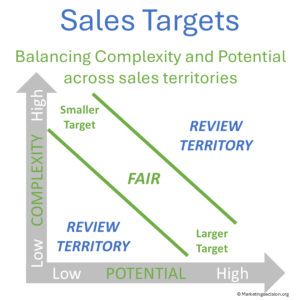 Salespersons with large, high-potential territories often find it easier to deliver strong volumes and meet their objectives, yet they may overlook new opportunities and become complacent over time. In contrast, those managing small or low-potential territories face greater pressure to reach their targets, which can lead to frustration or resignation. In some cases, they even leave for competitors, when the real issue lies in the territory’s limited potential rather than their individual performance.
Maintaining a sense of balance across territories is therefore essential to preserve motivation, fairness, and retention.
For management, the sum of individual targets rarely matches the total regional goal exactly. A small adjustment margin — a few percentage points — ensures team recognition while keeping overall accountability. Managers should also have “skin in the game,” sharing the same total target logic as their teams.
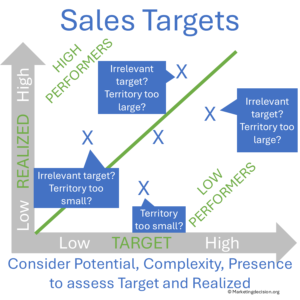 Markets evolve. Sales compensation plans must therefore remain flexible. Once an element becomes established, removing it later can be difficult, so it is important to anticipate potential adjustments.
Managers should remain vigilant against end-of-period behaviors, such as delaying order entry to manipulate target timing. Continuous visibility of performance metrics helps discourage such practices and keeps focus on true customer value.
Fair measurement also requires accounting for cancellations, delayed deliveries, or pricing errors. Adjustments must reflect genuine performance and exclude factors beyond the salesperson’s control.
 Each salesperson should be able to visualize their progress toward targets at any time. Transparent dashboards showing orders, revenues, and conversion rates support trust and engagement.
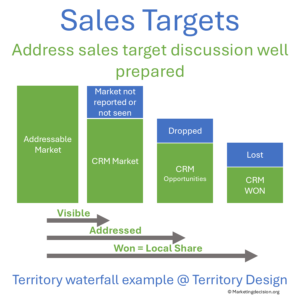
Differences in reporting habits can distort visibility — some salespeople record every opportunity, others only near-closing ones — so metrics should normalize these differences.
Developing an individual market waterfall can be an excellent tool for this purpose. It tracks the flow from total market potential to opportunities identified, won, or lost. This view enables focused discussions on market coverage, win rates, and visibility gaps.
Such metrics also facilitate alignment between Sales and Marketing teams by offering a shared, data-driven view of performance.
 Sales teams are the frontline source of market intelligence. Their feedback reveals shifts in buyer behavior, competition, and local demand.
However, ups and downs are not always communicated symmetrically — growth may be downplayed while declines are exaggerated during compensation discussions. Sales discussions often emphasize market slowdowns more than growth, so it’s important to identify and act on rising opportunities early.
Listen carefully, identify market growth opportunities, and involve your sales team in scenario planning. Building win-win plans fosters ownership and prepares the organization to respond quickly when markets change.
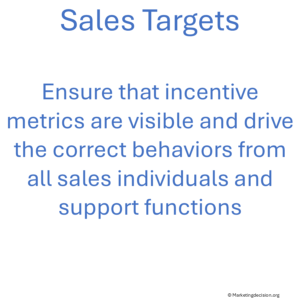 A good sales compensation plan is more than a pay structure. It is a strategic tool that drives the right behaviors, encourages collaboration, and sustains motivation over time.
In the marketing mix, the compensation plan represents the final “Place” element of sales activation, translating market and product strategy into individual performance. Once market opportunities are identified, products aligned, and the Go-To-Market strategy defined, the compensation plan becomes the final step in activating the salesforce.
Ensure metrics are visible, achievable, and aligned with company goals. This will help control costs, maintain flexibility, and promote balanced growth during both up and down markets.
Sales programs become more effective when anchored in a deep understanding of customer needs and motivations. For these foundational insights, visit our Customer Mix page.
Targets become meaningful when aligned with purpose and planning. Visit the Decision Mix for the planning foundations that shape targets.
Targets become clearer when grounded in channel capacity and placement logic. Refer to Place Mix Strategy for this foundation.
The Market Waterfall provides a comprehensive view of the market journey, from the total market perspective down to what is successfully captured at each step. 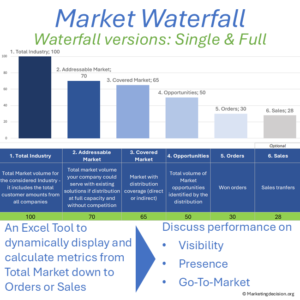 This tool is particularly beneficial when working through distributors, as it allows for independent data collection and analysis. It offers key insights to facilitate discussions on market presence, visibility and competitive positioning.
For organizations with a direct salesforce, the Market Waterfall provides an opportunity to evaluate performance against expectations, assess CRM utilization for visibility, analyze sales coverage, expertise, and alignment with market opportunities. In these discussions, it is crucial to involve both Sales and Marketing teams to foster collaboration and alignment.
Demo available on YouTube: https://youtu.be/MSDdvVlQi4E
Use this waterfall tool to evaluate the waterfall chain for one single segment or multiple ones.

Explore tools related to the topics covered in this section. For a wider selection, visit our webshop using the link below, or continue browsing our marketing mix pages for additional insights and solutions.