
Project Prioritization Matrix: Criteria, Framework & 2-Step Method

Decision Project Prioritization

Project Prioritization

A project prioritization matrix is a structured framework used to compare initiatives and support decision-making based on consistent criteria such as impact, complexity, cost, and return on investment (ROI).

There are multiple situations where decisions must be made across projects and proposed solutions. Project prioritization is essential to structure these decisions and ensure resources are allocated effectively, as part of a broader marketing decision-making process.

This page presents a project prioritization framework, the criteria used to compare initiatives, and a simple 2-step method to support consistent and transparent decisions.

The project prioritization matrix provides a practical and visual way to apply these principles and support consistent decision-making across teams.

Project Prioritization Matrix: Streamlining Decisions with Clear Criteria

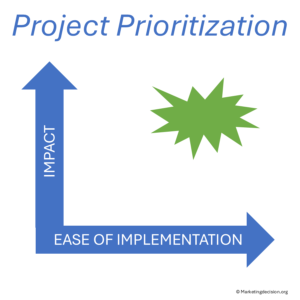
For marketing investment decisions, several projects compete for limited resources. These initiatives must be prioritized based on their expected impact, ease (and cost) of implementation, and additional criteria such as ROI, strategic relevance, or distribution across teams.
Project Prioritization Matrix: Streamlining Decisions with Clear Criteria

A structured project prioritization matrix helps focus efforts on the initiatives that create the most value. Project prioritization is in fact essential to structure these decisions and ensure resources are allocated effectively, as part of the broader marketing decision-making process (see Marketing Decision-Making).

For marketing or quality initiatives, proposed actions are often identified and need to be prioritized. Some actions deliver short-term results with immediate impact, while others are longer-term, more complex to implement, and sometimes offer less immediate visibility on outcomes.

Prioritizing these actions ensures a balanced approach between quick wins and long-term initiatives.

In many cases, a Pareto analysis or similar assessment has already been completed, highlighting the factors with the highest importance and impact. The next step is to translate these insights into clear project priorities using a prioritization framework.
What Is a Project Prioritization Matrix

A project prioritization matrix is a practical tool that supports the comparison of initiatives using defined criteria. It allows teams to rank projects, visualize trade-offs, and make informed, transparent decisions aligned with business objectives.

By structuring discussions around consistent parameters, the matrix reduces subjective bias and improves alignment across stakeholders.

Project Prioritization Framework: Criteria & Process

A project prioritization framework defines:

  • the criteria used to evaluate projects
  • how these criteria are compared
  • the process used to reach decisions

The project prioritization matrix is the visual implementation of this framework.

Develop Selection Criteria

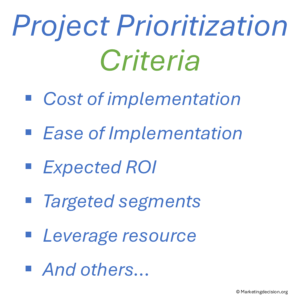
Project Prioritization Matrix: Develop Selection Criteria ListAmong the criteria used to compare projects:

  • Cost of implementation
  • Ease and risk of implementation (including required technology or expertise)
  • Expected ROI
  • Targeted customer segments
  • Distribution of projects across teams

The matrix allows multiple criteria to be combined depending on context.

Project Prioritization Matrix: Define Axes and Dimensions

 A project prioritization matrix typically compares initiatives across two main axes, with an optional third dimension:
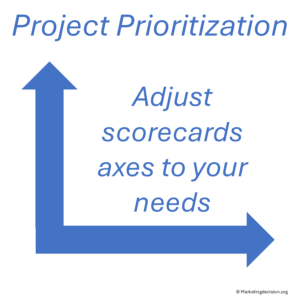
  • Project Prioritization Matrix: Determine Appropriate Axes CriteriaHorizontal axis: ease or complexity of implementation (may include deployment cost)
  • Vertical axis: impact or importance of the project
  • Bubble size: ROI or incremental revenues
  • Color coding: categories such as customer segments or business units

These dimensions help visualize and discuss projects effectively.

Projects with high impact and ease of implementation are often considered “low-hanging fruits.” However, they must still be assessed against strategic priorities and long-term objectives.

Project Prioritization Frameworks & Scoring Models

A project prioritization matrix does not replace decision-making—it supports it. It helps visually navigate solutions and answer the “why” questions:

  • Why should this project or action be prioritized?
  • What is the real impact?
  • What is the ROI?
  • What is the true impact for customers?
  • Will this become a competitive advantage? (Solution Perceived Value)

Frameworks and scoring models support objective choices. Tools help answer the “what” questions, but the “why” remains most important. Reviews must include discussions on alignment with company priorities. Sponsors and facilitators should be engaged as necessary to support these discussions.

For instance, ensure to validate the scope of projects using Decision scope – Frame in out.

Steps to Use the Project Prioritization Matrix

Teams must coordinate to estimate project metrics for a fair comparison of projects or solutions. Consolidation of projects can be centralized, allowing fruitful discussions across teams.

Two steps are required:

  1. Identify and map projects along agreed prioritization parameters. Prepare additional information for team discussions.
  2. Review and discuss across teams to select projects for execution.

Multiple formats are possible. For projects with a few options, the team can identify the “low-hanging fruits” in the top-right quadrant (high impact, easy implementation).

For projects spanning multiple teams, higher management discussions are needed, similar to budget planning (see also: Decision Marketing Plan Creation).

In Summary

The project prioritization matrix provides a shared reference that structures discussions and reduces recurring debates.
Project Prioritization Matrix Principles

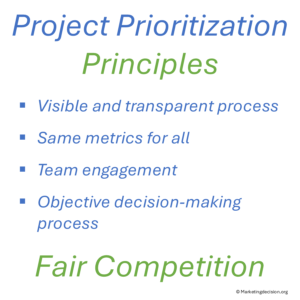
Benefits are:

  • Visibility across projects.
  • Capability to discuss each project along the same metrics.
  • Teams engaged and possibly competing for resources.
  • Decisions better informed and more objective.

In practice, this matrix can introduce a session engaging project prioritization, and serve as a reference in reviews.

Project prioritization only creates value when grounded in clear objectives and shared criteria. See the Decision Mix for the principles that guide effective decision-making.

Frequently Asked Questions (FAQ)

What is a Project Prioritization Matrix?

A Project Prioritization Matrix is a framework that compares projects by impact, ease of implementation, cost, and ROI. It provides a consistent method for prioritizing projects.

Typical criteria include ease of implementation, cost, risk, expected ROI, and customer impact. Teams may also add factors such as alignment with company strategy or resource availability.

A framework defines the methodology: the criteria, process, and decision rules. A tool, such as the Project Prioritization Matrix Tool, is the practical implementation that makes applying the framework easier and more visual.

© marketingdecision.org

Tools

When using a project prioritization tool, it is important to create an environment where teams can engage in open and constructive discussions.

Start by clearly defining the project scope and avoiding overloading the process with too many topics at once.

Anticipate the “why?” that arises during project prioritization presentations. Ground your evaluation of the two axes (such as impact and effort) with clear, well-supported assessments. You might use techniques like scorecards or voting, but always summarize the key factors that justify each evaluation. This not only strengthens the rationale for your choices but also provides a valuable reference point if priorities need to be revisited as circumstances change.

The prioritization process will often surface multiple projects, while only a subset will be selected. Maintaining a clear, high-level view helps ensure alignment with broader market opportunities.

Project Prioritization Matrix Tool

To apply this framework in practice, a project prioritization tool is required.
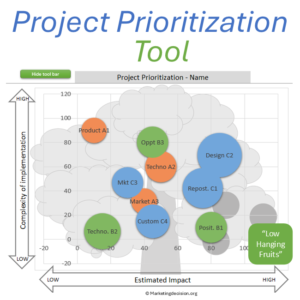
Project Prioritization Matrix Tool

The Project Prioritization Tool (Excel Matrix for Impact, Complexity & ROI) provides a structured way to compare initiatives visually and support decision-making across teams.

The number of solutions for comparison can be set from 2 up to 100. Projects can be organized by category (market segments, initiatives, business units). Excel filters allow focusing on selected projects.

The matrix uses:

  • impact and ease or complexity as axes
  • ROI as bubble size
  • color coding for categorization

This enables teams to identify priority initiatives and support structured discussions.

Visit our Webshop

marketing decision shop access image

Explore tools related to the topics covered in this section. For a wider selection, visit our webshop using the link below, or continue browsing our marketing mix pages for additional insights and solutions.

© 2026 MARKETING DECISION SOLUTIONS. All Rights Reserved.